Starting in spring, but especially from July onward, Québec’s forests quietly but irresistibly call out to us. From the warm, humid weeks of summer to the crisp, colourful days of fall, the forest floor comes alive with earthy aromas… and little treasures popping up from the ground: mushrooms. 🍄🟫
These fleeting wonders, some edible and others toxic, are as fascinating as they are intimidating.
Mushroom foraging isn’t just a hobby. It’s a sensory experience, a lesson in patience and observation, and a great excuse to slow down and learn from the forest’s ecosystems. Whether you’re out for a casual walk in nature or ready to dive into the fascinating world of fungi, here’s a beginner-friendly guide to get you started, whether you’re with a guide or simply guided by your curiosity. 🔎
Copyright: Tourisme Mauricie
Where to Go Mushroom Foraging
Good news: in Québec, mushrooms grow just about everywhere.
Not-so-good news: just because they grow everywhere doesn’t mean you can pick them anywhere.
Mixed forests—coniferous or deciduous—each offer their own habitats and host a wide variety of mushroom species. Some thrive in mossy areas, others prefer specific forest floors or grow near dead trees. What matters most is choosing a place where foraging is allowed.
In public forests, mushroom picking is generally permitted, except in ZECs (check for local rules), provincial and federal parks, ecological reserves, protected areas, and some regional parks, depending on their regulations. On private land, foraging is allowed only with the landowner’s permission.
Organized Foraging Outings
Then there are the guided outings, led by mycologists, experts or certified foragers. Not only do they take you to mushroom-rich spots, they also help you discover species you might never have dared to pick on your own.
In Mauricie, for example, you’ll find the only accredited mushroom guides in the province, recognized by Aventure Écotourisme Québec. Kamouraska is another region particularly well-organized for these kinds of outings. Local amateur mycology clubs across the province are also great options for unique and enriching experiences.
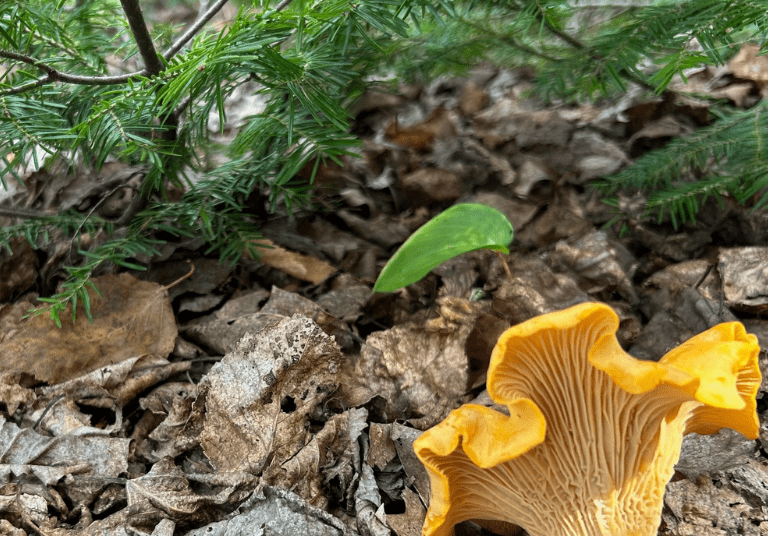
Common chanterelle. Copyright: Patrick Lupien
When to Go Foraging
Mushrooms don’t wait for anyone. They appear when the forest feels like offering them up. A seasonal calendar can help guide you, but in the end, the weather always has the final say.
The great fungal waltz begins in May with morels—elusive and mysterious. In June, polypores start emerging on deadwood. July and August bring the rich aromas of golden chanterelles and boletes. But it’s in September and October that the forest truly turns into a feast. This is the peak season: winter chanterelles, hedgehog mushrooms, tricholomas, toothed fungi, matsutake and more. The woods come alive, mushrooms burst through the leaves, and every step can lead to a discovery.
By November, the frosts begin to take over. Yet a few hardy species still hang on, stretching the season just a little longer.
The Golden Rules of Responsible Foraging
Foraging for mushrooms is much more than a treasure hunt. It’s a mindful act that calls for attention, respect… and a touch of humility.
Here are a few simple guidelines to help you forage responsibly and safely:
- Never pick a mushroom you can’t identify. Proper identification is essential. If you’re unsure, have it verified by a mycology expert. Some toxic species are nearly identical to edible ones.
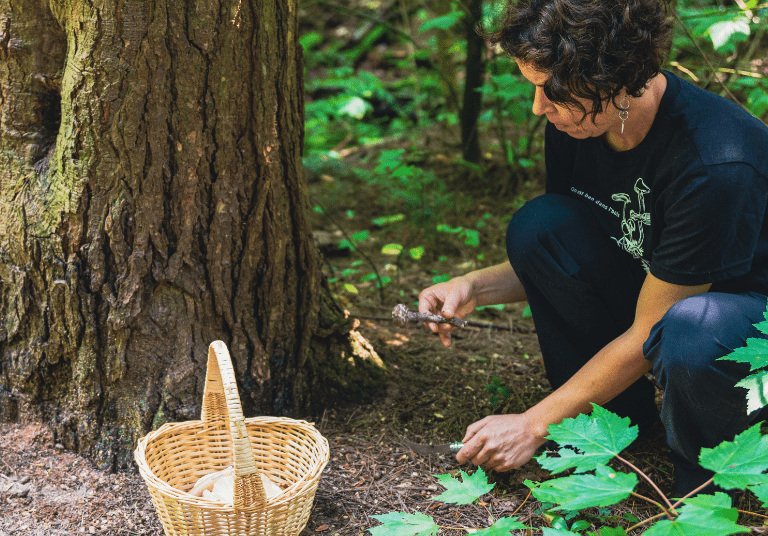
- Use a knife to cut mushrooms at the base – it’s cleaner and more practical.
- Bring a breathable basket lined with a cloth to reduce debris buildup. Avoid plastic bags.
- Stay out of areas where foraging is not allowed.
- Always cook wild mushrooms, start with a small amount, and avoid sharing them with children or anyone in fragile health. If poisoning is suspected, contact the poison control center or a qualified expert immediately.
- Follow basic food safety practices.
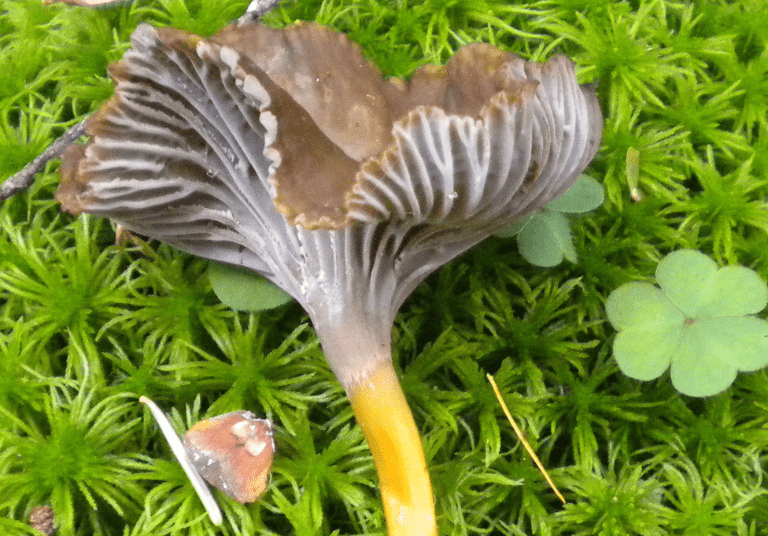
Yellow-foot chanterelle
With or Without a Guide? Two Ways to Discover the Fungal World
Of course, you can learn to forage on your own. But just like hiking in the mountains or sailing at sea, taking your first steps is safer with someone who knows the terrain. Going solo offers freedom—the freedom to explore at your own pace, observe quietly, and test your knowledge. But it also requires a clear awareness of your limits and skill level.
Choosing a guided outing means learning through experience. Guides share more than just their knowledge of mushrooms. They teach about ecosystems, culinary uses, and key safety practices. In just a few hours, you can gain months’ worth of knowledge and confidence.
Today in Québec, there’s a wide range of options: beginner-friendly outings, culinary workshops, immersive getaways, and hands-on training. Some experiences focus on preserving your harvest—like drying or pickling—while others invite you to cook the day’s finds right on-site with a chef.
The Many Faces of Foraging
What makes foraging so special isn’t just what you find… it’s how you experience it.
- Introductory outings—usually half-day or full-day—are a great way to get started without pressure. You’ll learn to identify a few key species, read the signs of their preferred habitats, and understand which weather conditions help them thrive.
- Family-friendly outings, adapted for kids, are perfect for passing on a love of nature with curiosity and playfulness.
- Mycotourism getaways offer the full experience: staying in the forest, cooking your harvest, meeting local producers and artisan processors, and sometimes even dining with chefs who feature wild mushrooms on their menus.
- Professional-level workshops are for those who want to take things further. They cover commercial quality standards, regulations, and important topics like sustainability and traceability.
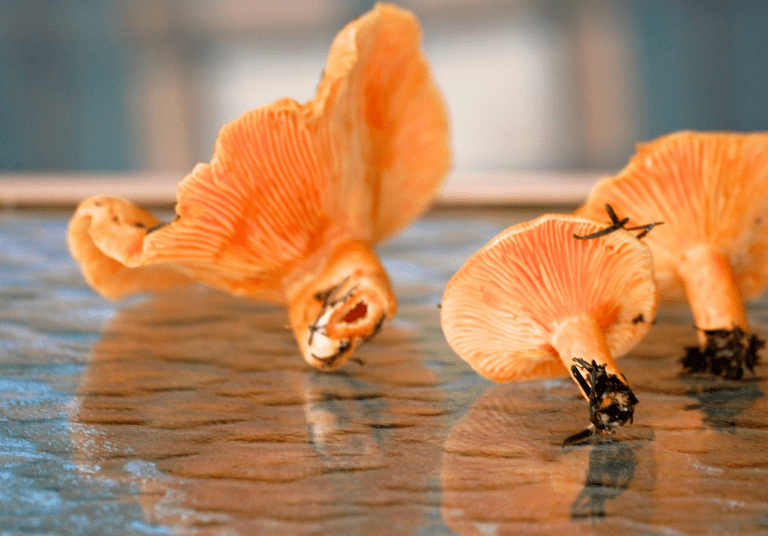
Lactaire délicieux
Before You Go: What to Bring
Here are a few essentials to pack in your bag or basket:
- A good knife with a fine blade
- A basket or firm mesh bag
- A printed identification guide (apps are no match for real experience… or intuition)
- A water bottle and a small notebook to jot down your finds
- Season-appropriate clothing, waterproof boots, and insect repellent
And most importantly: bring your patience and curiosity.
In Conclusion: A Lesson from the Forest
Foraging for mushrooms isn’t about quantity. It’s a slow, instinctive learning process that reconnects us with the rhythms of the forest. Each outing is different. Sometimes, you come back with an empty basket… but a full heart.
That might just be the magic of mushrooms: they teach us to see differently, to slow down, to tread lightly. Whether you head out with a guide or on your own, for an hour or a weekend, your first foraging experience will always be a discovery. Not just of mushrooms—but of yourself, in the forest. 🍁 🍂